Whole
On identity, new beginnings, and the discovery that I don't have to choose between my parts to be who I am.
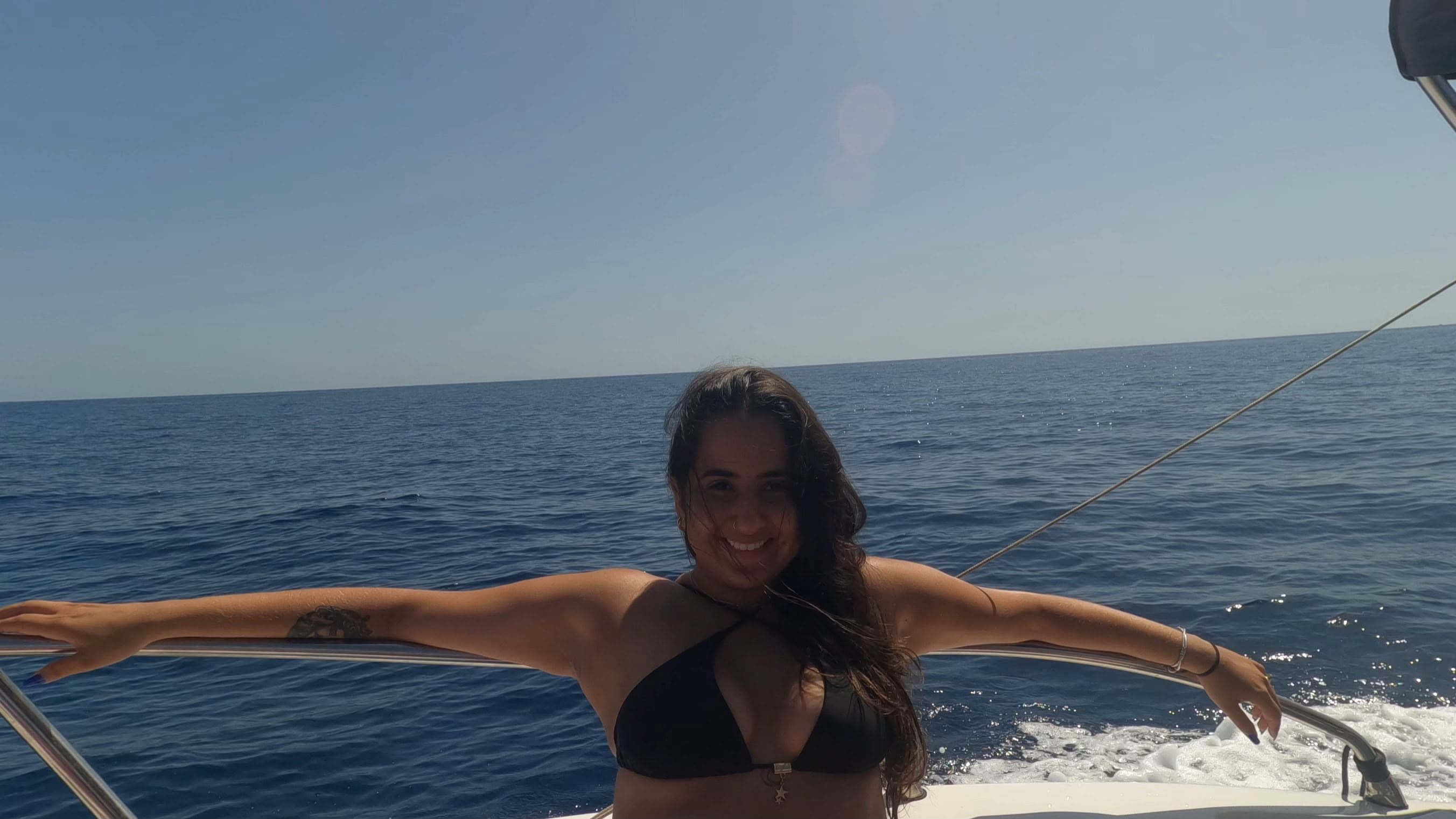
For a long time, I believed that life required definitions. That you had to choose a side, a version of yourself, one main path and stick to it. As if coherence were a straight line and not a collection of curves.
Today, I realize I am made precisely of improbable encounters.
I am the blend of a Sunday afternoon samba with ABBA playing on a European summer night. I love gelato almost as much as I love açaí. I grew up believing that liking such different things was a sign of indecision, when, in truth, it was perhaps just a broader way of experiencing the world.
It took me a long time to understand that I didn't have to choose between one thing and another. That I could embrace the paradox.
I am a software developer. I am fascinated by logic, patterns and complex problems. I studied three semesters of Physics at a public university, enchanted by the elegance of equations and by the way they attempt to explain the universe. But I am also passionate about travel, books, writing and stories. I create content in three languages and find pleasure both in organizing code and in organizing words.
For a long time, I thought my profession should answer the question: "Who are you?" Until I discovered that it only answers a part of it.
This discovery did not come quietly.
Earlier this year, life forced me to face a question I had been avoiding for a long time: who am I when my job title ceases to exist?
When a work contract came to an end, something inside me also seemed to dissolve. Unemployed, I realized I had placed a dangerous part of my identity in what I did for a living. And when that structure disappeared, I no longer knew exactly who I was.
The search for a new opportunity became almost obsessive. I believed the next job would fill the void, restore my sense of security and bring back the image I had of myself. But the more I searched, the more I realized I was trying to sell an incomplete version of my own story.
It was during this process — and through a period in which depression almost consumed me — that I began to understand something transformative: I was never just a front-end developer.
I was the person who wrote code, yes. But I was also the one who saw the product through the user's eyes. The one who asked questions about behaviour, experience and meaning. The one who had a natural sensitivity for design, a restless creativity and a curiosity that went beyond any job description.
I had spent so much time trying to fit into a professional definition that I forgot to see everything that existed around it.
It was only when I stopped trying to prove I was a good developer and started showing who I really was — the problems I love solving, the way I think, the improbable combination of logic and creativity, technique and sensitivity — that something changed.
I realized that my strength was never in fitting inside a specific role. It was always in my multiplicity.
Perhaps I should have realized this sooner.
I grew up between extremes that never seemed like extremes to me. Between the city and the countryside. Between private school and the days of feeding the pigs, riding horses and coming home smelling of earth. Between asphalt and dust, between technology and the simplicity of rural life.
Perhaps that was where I learned, without realizing it, that a person can inhabit different worlds without ceasing to belong to any of them.
And yet, for many years, this multiplicity troubled me. I called curiosity indecision. I called breadth a lack of personality. I judged as a flaw what I now recognize as one of my greatest qualities.
I spent too much time trying to fit into simple definitions, when the truth is I was never simple. Not because I am contradictory, but because I am human.
Today I understand that we are more than the titles we hold, the degrees we collect or the descriptions that fit in a professional profile. We are also the books that transformed us, the trips that challenged us, the conversations that marked us, the places we came from and the dreams we insist on carrying.
We are our contradictions.
We are our paradoxes.
We are every version of ourselves that we learned to accept.
Today, I would trade every adjective I used to diminish myself for just one: incredible.
Not because I do everything perfectly. Quite the opposite. But because I finally understood that I don't have to choose between my parts to be whole.
I can love samba and ABBA.
I can choose between gelato and açaí depending on the day.
I can write code and stories.
I can be rational and creative.
I can be technical and sensitive.
I can be many things at once.
And perhaps the greatest freedom in life is precisely this: discovering that we don't have to reduce ourselves to fit others' expectations. We can carry all our versions with us, blend them, reinvent them and still remain exactly who we are.
Or rather: to become, each day, more of who we always were.